


Clinical Utility of eGFR Slope Across Cardio-Kidney Care and Trial Design


Part of New Horizons in Cardio Kidney Disease, this symposium explores eGFR slope as a practical, clinically meaningful tool for risk stratification, trial design, and treatment decision-making.
Chaired by Prof Smeeta Sinha (Salford Royal Hospital, Salford, UK), the session features a global faculty; Dr Alberto Ortiz (Madrid, ES), Dr Brendon Neuen (The George Institute for Global Health, Sydney, AU) and Dr Navdeep Tangri (University of Manitoba, Winnipeg, CA). Together, they provide a structured and clinically grounded discussion on how eGFR trajectory can move beyond descriptive monitoring to actively inform patient care.
The programme begins with a deep dive into eGFR slope as a tool for risk stratification, including how to distinguish true disease progression from biological and measurement variability. The faculty then explore the validation of eGFR slope as a clinical trial endpoint, highlighting its growing role in therapeutic evaluation and drug development.
This is followed by how to translate evidence into practice, including how eGFR slope can support earlier identification of high-risk patients, improve integration with complementary markers such as albuminuria and blood pressure phenotypes, and guide decisions around treatment optimisation, escalation, and multidisciplinary referral.
A case-based panel discussion brings these concepts into real-world clinical scenarios, followed by an audience Q&A and key takeaways designed to reinforce practical application.
Key Learning Objectives
- Interpret eGFR slope in clinical practice, including differentiating true disease progression from biological and measurement variability
- Explain the relationship between eGFR trajectory and kidney and CV risk and recognise its value in identifying high-risk patients earlier in the disease course
- Integrate eGFR slope with complementary risk markers (e.g., albuminuria, blood pressure phenotypes, and cardio-metabolic factors) to refine risk stratification across the cardio-kidney disease spectrum
- Apply eGFR slope to inform clinical decision-making, including treatment optimisation, timing of therapy escalation, and appropriate multidisciplinary referral
- Describe the emerging role of eGFR slope in clinical research and therapeutic evaluation and consider its potential implications for future clinical practice
Target Audience
- Nephrologists
- Cardiologists
- Endocrinologists
More from this programme
Part 1
Understanding eGFR Slope and Its Use to Stratify Risk
Alberto Ortiz (Madrid, ES) explains what eGFR slope represents, how it is measured, and how changes over time can provide deeper insight into kidney disease progression beyond a single eGFR value. He highlights how eGFR slope can identify rapid progressors, inform cardio-kidney risk assessment, and support earlier intervention.
Part 2
eGFR Slope as a Validated Endpoint in Clinical Trials
Brendon Neuen (Sydney, AU) examines why eGFR slope has become an important endpoint in clinical trials, particularly where traditional kidney outcomes may take longer to demonstrate treatment effects. He highlights the evidence supporting eGFR slope as a surrogate marker and its growing role in trials.
Part 3
From Measurement to Action
Navdeep Tangri (Winnipeg, CA) focuses on translating eGFR slope into clinical practice, including approaches to standardised measurement and interpretation alongside key factors such as uACR, blood pressure, and comorbidities. He also discusses when changes in trajectory should prompt treatment escalation, referral, or closer monitoring.
| 1 session | |
| From Measurement to Action | Watch now |
Part 4
Case-Based Decisions Panel Discussion and Audience Q&A
Smeeta Sinha (Salford, UK) chairs a practical discussion applying eGFR slope concepts to a real-world patient case. The panel will explore how declining kidney trajectories influence decision-making across specialties and discuss approaches to escalation, referral, and monitoring.
The session concludes with an interactive Q&A addressing key audience questions and reinforcing the practical application of eGFR slope in clinical practice.
Faculty Biographies

Smeeta Sinha
Consultant Nephrologist
Prof Smeeta Sinha is Consultant Nephrologist at the Northern Care Alliance NHS Foundation Trust and Honorary Professor at the University of Manchester, UK. She served as Clinical Director for Renal Services from 2014 to 2020, expanding kidney care across Greater Manchester. In 2021, she became Deputy Director for Research & Innovation at Northern Care Alliance.
Her clinical interests include CKD, metabolic stone disease and glomerulonephritis. She leads the integrated glomerulonephritis service at Salford Royal, covering 1.3 million people.
Her research focuses on CKD-mineral bone disorder, vascular calcification, glomerulonephritis and rare renal diseases. She is an internationally recognised expert in calciphylaxis and supports trials from Phase 1 to 3.

Alberto Ortiz
Chief of Nephrology and Hypertension
Prof Alberto Ortiz is Head of Nephrology and Hypertension at the Fundacion Jimenez Diaz Health Research Institute and University Hospital (IIS-FJD-UAM), Madrid, Spain and Professor of Medicine at the Universidad Autonoma de Madrid (UAM).
He is European Renal Association (ERA) Chair of the Registry, as well as Clinical Science Chair-elect, coordinator of the Spanish Kidney Research Network (REDINREN, RICORS2040) and of SPACKDc (ISCIII Precision Medicine initiative), distinguished Fellow of the ERA (FERA), Board member of SOMANE. He received the 2020 ERA-EDTA Award for Research Excellence and in December 2023 co-chaired the KDIGO Controversies Conference on Maintaining Kidney Health and Preventing CKD.
He trained as a nephrologist and completed his PhD at IIS-FJD-UAM and was a Molecular Nephrology Postdoctoral researcher at the University of Pennsylvania. He was Editor-in-Chief of Clinical Kidney Journal (2014-2022). Research interests include the epidemiology…

Brendon Neuen
Associate Prof Brendon Neuen is Lead Global Clinical Trialist at The George Institute for Global Health, and Staff Specialist Nephrologist, Director of Kidney Trials, at Royal North Shore Hospital in Sydney, Australia.
His research has informed more than 30 clinical practice guidelines and consensus statements, and he is actively involved in the development of national and international standards, including for KDIGO and the American Society of Nephrology. Associate Prof Neuen has authored over 175 peer-reviewed publications, including works in the New England Journal of Medicine, The Lancet, JAMA, and Nature Medicine. He serves on the editorial boards for flagship journals of the European Renal Association and the American Diabetes Association.
He studied medicine at James Cook University, holds a Masters in Global Health from the University of Oxford, a PhD from UNSW (NHMRC funded), and completed his Postdoctoral Fellowship at Harvard Medical School. A Fellow of…
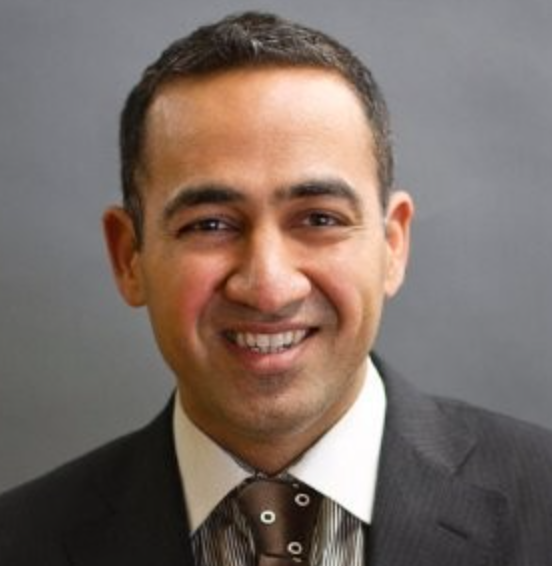
Navdeep Tangri
Professor of Medicine in the Division of Nephrology
Dr Navdeep Tangri is a Professor of Medicine in the Division of Nephrology at University of Manitoba, Winnipeg, CA.
Dr Tangri's research programme is focused on the clinical management of patients with advanced chronic kidney disease. He developed the kidney failure risk equation (KFRE) to predict the need for dialysis in patients with chronic kidney disease.